

Set up the context
For best results, have these files in the assistant’s context:.claude/skills/problem-creation/SKILL.md: the complete creation workflow.claude/skills/test-quality-assurance/SKILL.md: test enhancement and reproducibility checks.claude/CLAUDE.md: code standards and testing patterns
Ask for a problem
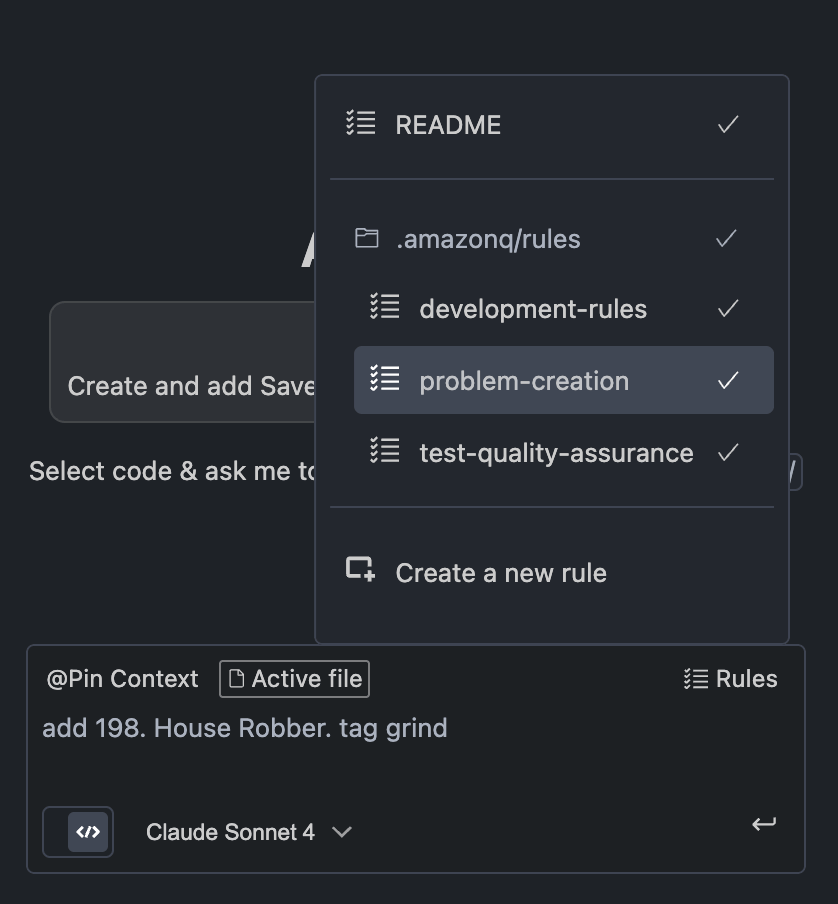
What the assistant does
- Scrapes the problem data from LeetCode
- Transforms it into the JSON template format, images included
- Creates
json/problems/{problem_name}.json - Updates
tags.json5with the requested tags - Generates
leetcode/{problem_name}/with the full problem structure - Runs the lint checks, iterating from step 3 until everything passes
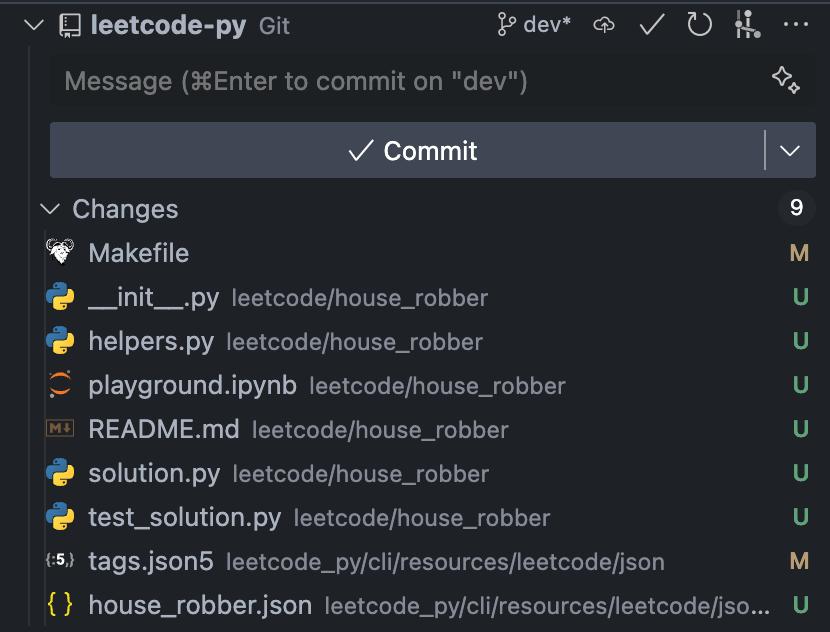
leetcode/{problem_name}/: the full
six-file layout with the README description,
helpers, playground, and tests, all from the JSON template.
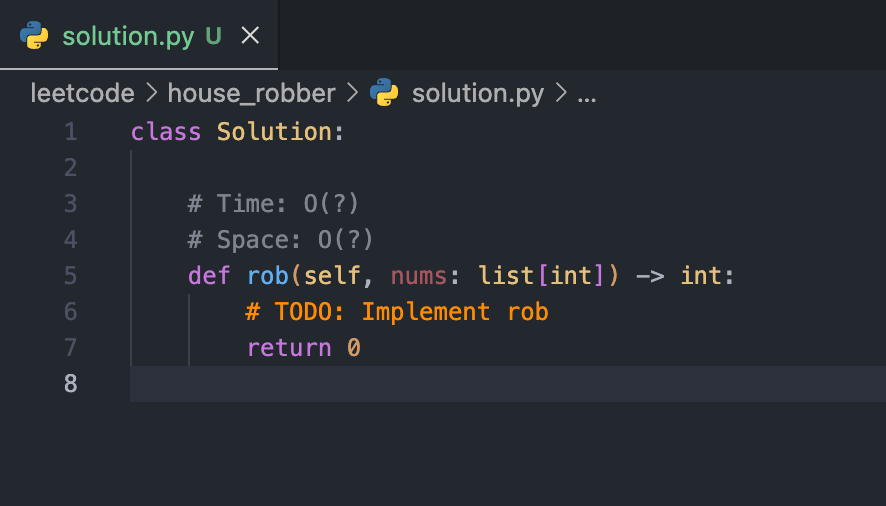
The generated solution.py arrives as a typed stub with a TODO, and
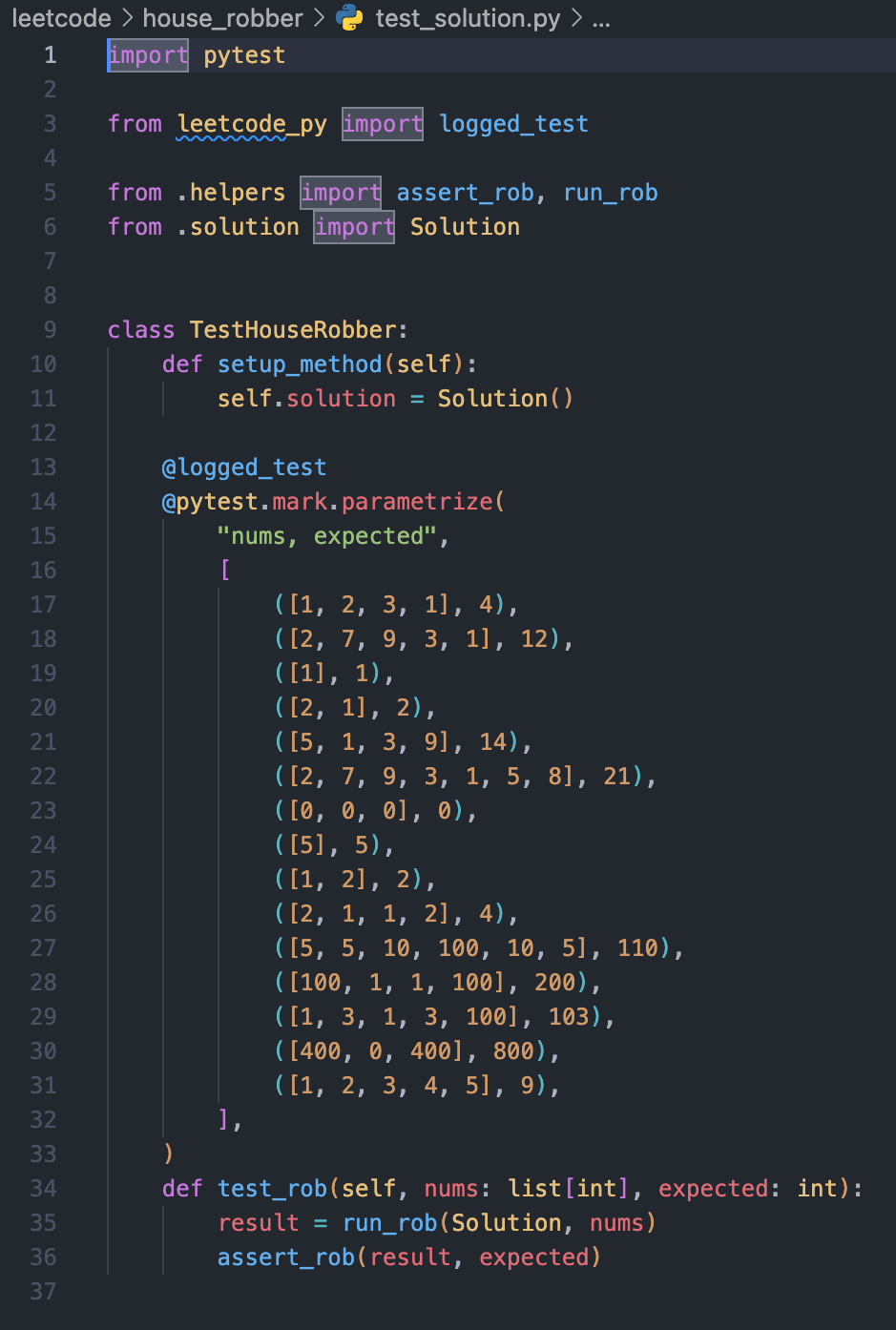
test_solution.py ships parametrized cases:
Implement and verify
The assistant then implements the optimal solution insolution.py (one
Solution class) and runs quality assurance per the test QA skill: tests
pass, at least 12 cases, and the suite reproduces after a regenerate and
restore cycle.
Generated test cases are a starting point, not gospel. The assistant
verifies expected values, and so should you before trusting a suite.
Batch creation
/batch-problem-creation [count] (default 5) loops the whole workflow over
the next problems in the roadmap lists:
.claude/.dev/problem_lists/unscrapable.py. Failed problems are
logged and the batch continues; you get a summary with success rate and
retry candidates at the end.
The pipeline, for reference
Everything above drives this machinery:problem_name,
problem_number, problem_title, difficulty, topics, tags) plus the
rendered content for each output file: the README description, examples and
constraints, helper function sources, solution skeleton, test content, and
playground cells. Bulk generation for practice is covered in
Collections.
Fix drift
leetcode/ is never edited by hand. When bake check-consistency (or CI)
reports that leetcode/ no longer matches the templates, edit the JSON
template, then regenerate:
bake gen-all-problems deletes
leetcode/ and regenerates all problems (it asks first outside CI). Two
more skills automate the common fixes:
consistency-fix
(drift repair) and
update-tags
(collection membership changes).