You are given a 2D integer array descriptions where descriptions[i] = [parent<sub>i</sub>, child<sub>i</sub>, isLeft<sub>i</sub>] indicates that parent<sub>i</sub> is the parent of child<sub>i</sub> in a binary tree of unique values. Furthermore,
If isLeft<sub>i</sub> == 1, then child<sub>i</sub> is the left child of parent<sub>i</sub>.
If isLeft<sub>i</sub> == 0, then child<sub>i</sub> is the right child of parent<sub>i</sub>.
Construct the binary tree described by descriptions and return its root.The test cases will be generated such that the binary tree is valid.
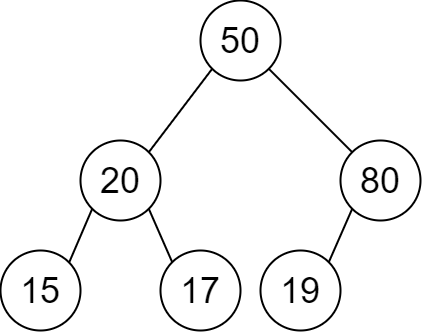
Input: descriptions = [[20,15,1],[20,17,0],[50,20,1],[50,80,0],[80,19,1]]Output: [50,20,80,15,17,19]Explanation: The root node is the node with value 50 since it has no parent.
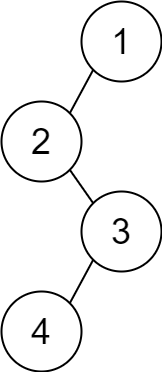
Input: descriptions = [[1,2,1],[2,3,0],[3,4,1]]Output: [1,2,null,null,3,4]Explanation: The root node is the node with value 1 since it has no parent.
from leetcode_py import TreeNodeclass Solution: # Time: O(n) - one pass to link nodes, one pass over created nodes to find the root # Space: O(n) - one TreeNode per unique value plus the children set def create_binary_tree(self, descriptions: list[list[int]]) -> TreeNode[int] | None: nodes: dict[int, TreeNode[int]] = {} children: set[int] = set() for parent, child, is_left in descriptions: if parent not in nodes: nodes[parent] = TreeNode(parent) if child not in nodes: nodes[child] = TreeNode(child) if is_left: nodes[parent].left = nodes[child] else: nodes[parent].right = nodes[child] children.add(child) for val, node in nodes.items(): if val not in children: return node return None